Stars and Compact Objects
Stars and Compact Objects
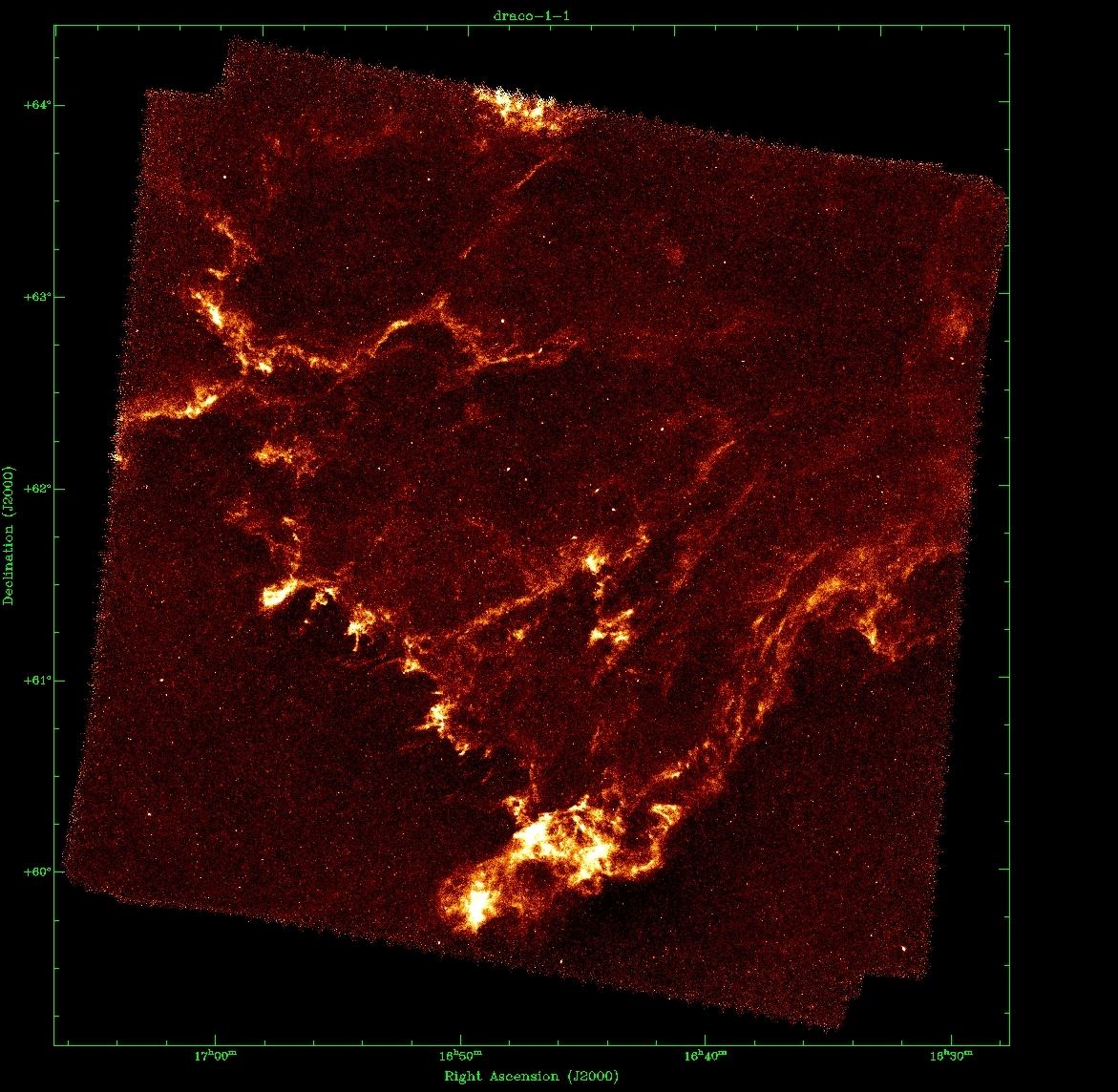
The department studies stellar formation, evolution, and feedback, with Christopher Matzner developing hydrodynamic models to understand how young stars inject energy and momentum into their birth clouds through radiation, ionization, winds, and explosions. These processes regulate star formation, shape molecular clouds, and influence the assembly of stellar clusters. Such theoretical insights connect directly to observational programs that probe star-forming regions and the initial conditions that set stellar and compact-object populations.
A major focus is the end stages of stellar evolution and the formation of compact objects. Maria Drout investigates massive stars as they evolve, lose mass, and explode, producing supernovae and leaving behind neutron stars or black holes, while Dae-Sik Moon observes rapidly evolving optical transients and “infant” supernovae to capture the earliest phases of these explosions. Chris Thompson and Bart Ripperda study plasmas around black holes and neutron stars. Marten van Kerkwijk studies neutron stars and pulsars with extreme precision, using astrometry and scintillometry to probe their physical properties and evolutionary histories. Extending this focus to compact-object populations beyond the Milky Way, Reed Essick develops gravitational wave and multimessenger inference methods to constrain the properties of neutron stars and black holes, while Maya Fishbach combines gravitational-wave observations with electromagnetic data to study the formation, environments, and evolution of binary black holes and neutron stars, as well as their host galaxies. Together, these efforts link stellar evolution, transients, and compact remnants across both observational and theoretical domains.
Supporting all of these studies is a robust statistical and data-driven program. Josh Speagle builds AI-enabled, scalable inference frameworks for analyzing massive stellar, transient, and compact-object datasets, allowing researchers to reconstruct formation and evolutionary pathways. Gwen Eadie applies hierarchical Bayesian modeling to infer mass distributions, orbital parameters, and host environments for stars and compact objects, including neutron stars and black holes. These methodologies are essential for interpreting the rich data generated by Drout, Moon, van Kerkwijk, Essick, and Fishbach, creating a coherent picture of how stars form, evolve, die, and leave behind compact remnants that shape the dynamics of galaxies and the Universe.
Department members conduct research in the areas of: Interstellar medium, star formation regions, variable stars, neutron stars, white dwarfs and black holes.
Maria Drout
Gwen Eadie (DAA & Statistics)
Reed Essick (CITA)
Maya Fishbach (CITA)
Bryan Gaensler (Status Only)
Renee Hlozek (DAA & Dunlap)
Peter Martin (CITA)
Chris Matzner
Dae-Sik Moon
Bart Ripperda (CITA)
Josh Speagle (DAA & Statistics)
Chris Thompson (CITA)
Marten van Kerkwijk